Address
PO Box 7045, Kingswell Invercargill 9844
Phone
0800 276 583
Owning a rental property in Southland can be a rewarding investment, but it also comes with important legal responsibilities. One of the most significant obligations for landlords is ensuring their rental properties comply with New Zealand’s Healthy Homes Standards.
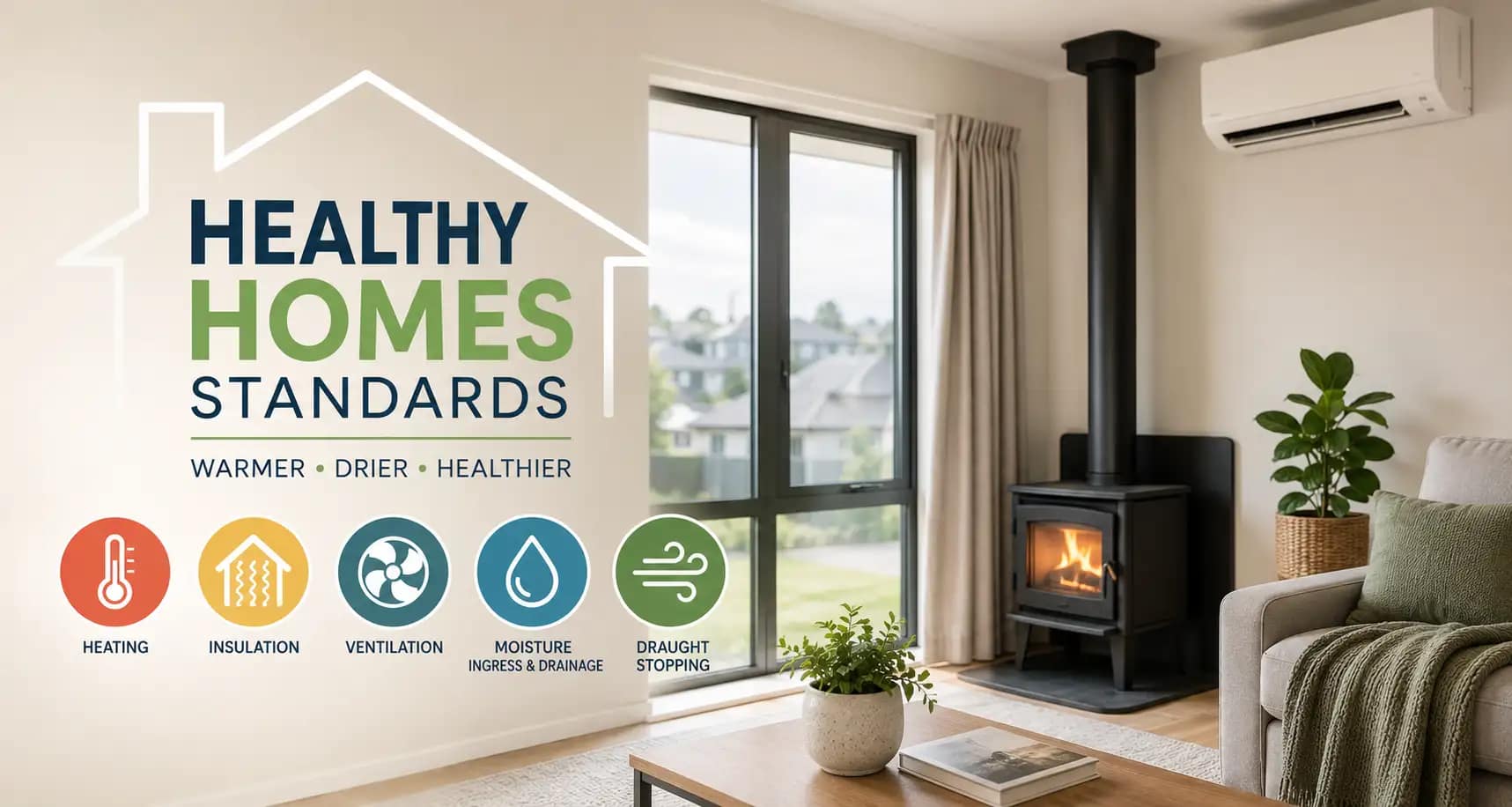
These standards were introduced to improve the quality of rental housing across New Zealand by ensuring homes are warmer, drier, healthier, and more energy efficient. They focus on five key areas: heating, insulation, ventilation, moisture ingress and drainage, and draught stopping.
For landlords in Invercargill and throughout Southland, compliance is particularly important due to the region’s colder climate and higher heating requirements during winter.
In this guide, we’ll explain what the Healthy Homes Standards are, what landlords need to do to comply, and how professional property management can help protect your investment.
The Healthy Homes Standards are minimum legal requirements for rental properties under New Zealand’s Residential Tenancies legislation. They were introduced to address issues associated with cold, damp, and unhealthy housing conditions. The standards cover five key areas:
The goal is to ensure rental properties provide healthier living conditions for tenants while also helping landlords protect the long-term value of their properties.
Since July 2025, all private rental properties in New Zealand are required to comply with the Healthy Homes Standards unless a specific exemption applies.
Southland experiences some of New Zealand’s coldest winter temperatures, making warm and dry homes essential for tenant comfort.
Properties that meet Healthy Homes requirements often benefit from:
Tenants today are increasingly aware of their rights and often look for properties that are warm, dry, and compliant before signing a tenancy agreement. Well-maintained properties can also help attract higher-quality tenants and support longer-term occupancy.
The Healthy Homes heating standard requires landlords to provide a fixed heating device in the main living area that is capable of heating the room to at least 18°C. Acceptable heating options may include:
Open fires and unflued gas heaters generally do not meet the standard requirements. Portable heaters also do not qualify as the primary heating source.
For many Southland rental properties, heat pumps remain one of the most effective and energy-efficient heating solutions.
Proper insulation helps retain heat during winter and improves overall energy efficiency.
The Healthy Homes Standards require ceiling and underfloor insulation in rental properties where installation is reasonably practical. Requirements vary depending on climate zones and insulation performance ratings. Newly built homes that comply with modern Building Code insulation requirements generally meet the Healthy Homes insulation standards as well.
Landlords should regularly inspect insulation to ensure it remains effective and has not deteriorated over time.
Good ventilation is essential for reducing moisture, condensation, and mould growth.
To comply with Healthy Homes Standards, rental properties must have:
Southland’s cooler climate can create significant condensation issues, making adequate ventilation particularly important for maintaining a healthy indoor environment.
Moisture is one of the biggest causes of property deterioration and tenant health concerns.
Rental properties must have:
Regular maintenance of drainage systems can help prevent costly repairs and reduce the likelihood of dampness-related issues.
Even small gaps can make a home colder and more expensive to heat.
Landlords must block unreasonable gaps and holes that create noticeable draughts in areas such as:
Unused fireplaces must also be blocked unless the landlord and tenant agree otherwise.
Draught stopping is often one of the most cost-effective ways to improve tenant comfort and reduce heating costs.
Landlords must provide Healthy Homes compliance information within tenancy agreements. This includes a compliance statement outlining how the property meets each of the standards or explaining any applicable exemptions.
Good record keeping should include:
Keeping accurate records can be invaluable if questions arise regarding compliance.
Failure to comply with Healthy Homes Standards can result in significant consequences for landlords.
Non-compliance is considered a breach of landlord obligations under the Residential Tenancies Act. Financial penalties and Tribunal action may apply where landlords fail to meet their responsibilities. Government guidance notes that landlords can face substantial penalties for breaches of Healthy Homes requirements.
Beyond legal risks, non-compliance may also lead to:
Keeping up with changing legislation can be challenging for landlords, particularly those managing multiple properties or living outside Southland.
A professional property manager can assist with:
By staying proactive, landlords can avoid costly surprises while ensuring their properties remain attractive to quality tenants.
Healthy Homes Standards are now a fundamental part of rental property ownership in New Zealand. For Southland landlords, maintaining compliance is not simply about meeting legal obligations—it is about protecting your investment, attracting quality tenants, and providing safe, comfortable homes.
With Invercargill’s colder climate, proactive property maintenance and regular compliance reviews are essential. Landlords who stay ahead of Healthy Homes requirements are better positioned to maximise rental returns and reduce long-term property risks.
Source of content: Healthy Homes Standards
Aggerholm’s Property Management helps landlords across Invercargill and Southland manage Healthy Homes compliance, property maintenance, tenant relations, and day-to-day property management.
Contact our team today for expert advice and professional property management services tailored to Southland landlords.
Phone: 0800 276 583
Email: anita@arental4u.co.nz