Address
PO Box 7045, Kingswell Invercargill 9844
Phone
0800 276 583

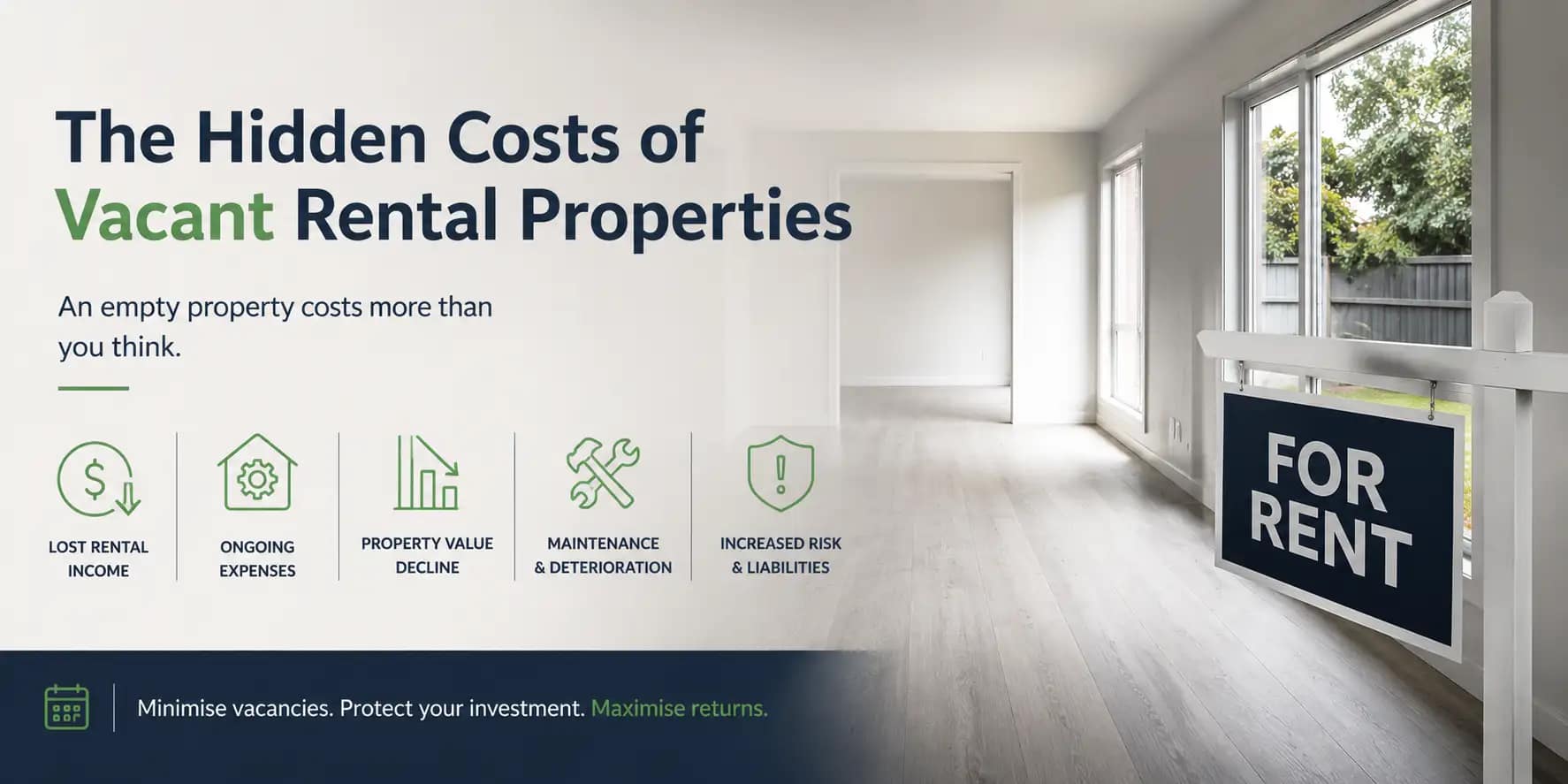
Every landlord understands that a vacant rental property means lost rent. However, many property owners underestimate just how expensive vacancies can become.
The true cost of a vacant property extends far beyond the weekly rent that isn’t being collected. Every empty day can impact cash flow, property condition, tenant demand, long-term returns, and overall investment performance.
For landlords in Invercargill and throughout Southland, understanding the hidden costs of vacancies is essential for protecting rental income and maximising the value of your investment.
In this guide, we’ll explore the often-overlooked financial and operational costs associated with vacant rental properties and discuss practical strategies to minimise vacancy periods.
Many landlords focus heavily on rental rates.
For example, they may spend considerable effort trying to increase rent by $10 or $20 per week.
However, losing several weeks of rental income due to vacancy can quickly erase the benefits of those increases.
Consider this example:
A property renting for $550 per week remains vacant for four weeks.
The direct income loss equals:
$550 × 4 = $2,200
That income can never be recovered.
Unlike maintenance expenses or property improvements, vacancy losses provide no long-term benefit to the investment.
The first and most immediate cost of vacancy is the loss of rent.
Even a short vacancy period can have a significant impact on annual returns.
Example
Weekly Rent: $600
Vacancy Period: 3 Weeks
Lost Income:
$1,800
For landlords with mortgages, rates, insurance, and maintenance expenses continuing regardless of occupancy, this loss can quickly affect cash flow.
The longer the vacancy, the greater the financial impact.
One of the biggest misconceptions among newer investors is that expenses pause when a property becomes vacant.
Unfortunately, they don’t.
Whether occupied or vacant, landlords still need to cover:
A vacant property can quickly turn a positive cash-flow investment into a financial burden.
Vacant properties often continue to generate expenses.
These may include:
Although these costs may seem relatively small individually, they accumulate over extended vacancy periods.
Finding a new tenant often requires marketing the property.
Common advertising expenses may include:
If a property remains vacant for longer than expected, landlords may need to increase advertising efforts to attract additional enquiries.
Vacancies often occur between tenancies.
Before a new tenant moves in, landlords frequently incur additional costs.
Professional cleaning may be required.
Minor damage often needs attention.
Walls may require touch-ups or repainting.
Floor coverings frequently need refreshing between tenancies.
Outdoor areas may require presentation improvements.
While some of these expenses help preserve property value, they still impact profitability.
Properties perform best when they are regularly occupied and monitored.
Vacant properties can experience:
Small maintenance problems can escalate when nobody is living in the property to identify them.
For Southland landlords, winter moisture and condensation can become particularly problematic in vacant homes.
Many landlords are unaware that extended vacancies can affect insurance coverage.
Some insurance policies impose conditions when a property remains vacant beyond a certain period.
Requirements may include:
Failing to comply with policy conditions could potentially affect future claims.
Landlords should always review their policy terms if a property remains vacant for an extended period.
Vacant properties often attract unwanted attention.
Potential risks include:
Even minor incidents can result in unexpected repair costs.
Maintaining regular inspections during vacancy periods helps reduce these risks.
Extended vacancies can sometimes create a negative cycle.
Prospective tenants may wonder:
Long vacancy periods may eventually force landlords to reduce rent in order to attract applicants.
This can impact future rental income and overall investment performance.
One of the most significant hidden costs is opportunity cost.
Every vacant week represents income that could have been:
Lost rental income isn’t just money not earned today—it can also affect future wealth creation opportunities.
Understanding vacancy causes can help landlords prevent them.
Common reasons include:
Setting rent above market rates can reduce enquiry levels.
Tenants are often attracted to well-maintained homes.
Unresolved maintenance issues can discourage applicants.
Dissatisfied tenants may choose not to renew leases.
Insufficient advertising can reduce property exposure.
Rental demand naturally fluctuates over time.
Successful landlords focus on vacancy prevention rather than vacancy management.
Keeping quality tenants is usually more profitable than constantly finding new ones.
Good tenants provide:
Maintaining positive relationships can significantly improve tenant retention.
Well-maintained properties attract stronger demand.
Focus on:
Properties that feel clean, warm, and modern generally lease faster.
Many landlords assume higher rent equals higher returns.
However, an overpriced property can sit vacant for weeks.
A fair market rent often delivers stronger annual returns than an inflated rent that results in extended vacancy periods.
First impressions matter.
High-quality images can significantly improve enquiry levels and attract more prospective tenants.
Professional marketing helps properties stand out in competitive markets.
Begin marketing before the current tenant vacates whenever possible.
This reduces downtime between tenancies and helps maintain cash flow.
Professional property managers understand local rental markets and tenant demand.
They can assist with:
Reducing vacancy periods is often one of the most valuable ways property managers improve investment performance.
Let’s compare two landlords.
Landlord A
Weekly Rent: $600
Vacancy Period: 6 Weeks
Annual Income:
$27,600
Landlord B
Weekly Rent: $580
Vacancy Period: 1 Week
Annual Income:
$29,580
Despite charging less rent, Landlord B achieves higher annual income because the property remains occupied.
This illustrates why occupancy is often more important than chasing the highest possible weekly rent.
Invercargill and Southland continue to offer strong rental opportunities compared with many larger centres around New Zealand.
However, tenants today have more choices and higher expectations.
Landlords who provide:
are generally better positioned to attract and retain quality tenants.
Minimising vacancy periods remains one of the most effective ways to maximise rental returns.
Most landlords understand the obvious cost of vacancy.
Far fewer appreciate the hidden expenses that accompany an empty property.
Lost rental income, ongoing expenses, maintenance risks, security concerns, advertising costs, and missed opportunities all contribute to the true cost of vacancy.
The most successful landlords focus not only on achieving strong rents but also on maintaining consistent occupancy and retaining quality tenants.
Reducing vacancies is one of the simplest and most effective ways to improve the long-term performance of your rental property.
At Aggerholm’s Property Management, we help landlords across Invercargill and Southland minimise vacancy periods, attract quality tenants, and protect their investments through professional property management services.
Contact our experienced team today to learn how we can help keep your rental property occupied and performing at its best.
Phone: 0800 276 583
Email: anita@arental4u.co.nz