Address
PO Box 7045, Kingswell Invercargill 9844
Phone
0800 276 583

For most property investors, owning a rental property is one of the most effective ways to build long-term wealth. However, achieving strong returns requires more than simply collecting rent each week.
The most successful landlords understand that maximising returns involves a combination of strategic planning, proactive maintenance, tenant retention, compliance management, and professional property management.
Whether you own your first rental property or have an established portfolio, making informed decisions can significantly improve both your rental income and your property’s long-term value.
In this guide, we’ll explore practical and proven ways Southland landlords can maximise returns from their rental properties in 2026 and beyond.
Many landlords assume rental returns are measured solely by the weekly rent they receive. While rental income is important, true investment performance is made up of three key components:
The weekly rent paid by tenants.
The increase in your property’s value over time.
Minimising vacancies, maintenance expenses, and unexpected repairs.
A successful rental property balances all three.
For example, increasing rent by $20 per week may generate additional income, but if it causes a quality tenant to leave and results in several weeks of vacancy, your overall return could actually decline.
Smart investors focus on sustainable long-term performance rather than short-term gains.
One of the most effective ways to improve your investment return is to secure reliable, long-term tenants.
Quality tenants typically:
Every time a tenant leaves, landlords face costs including:
A property that remains occupied by a quality tenant for several years often outperforms a property with higher rent but frequent turnover.
Respond quickly to maintenance requests
Keep communication professional
Conduct regular inspections
Ensure the property remains warm and comfortable
Review rent fairly and responsibly
Tenant retention is one of the simplest ways to improve profitability.
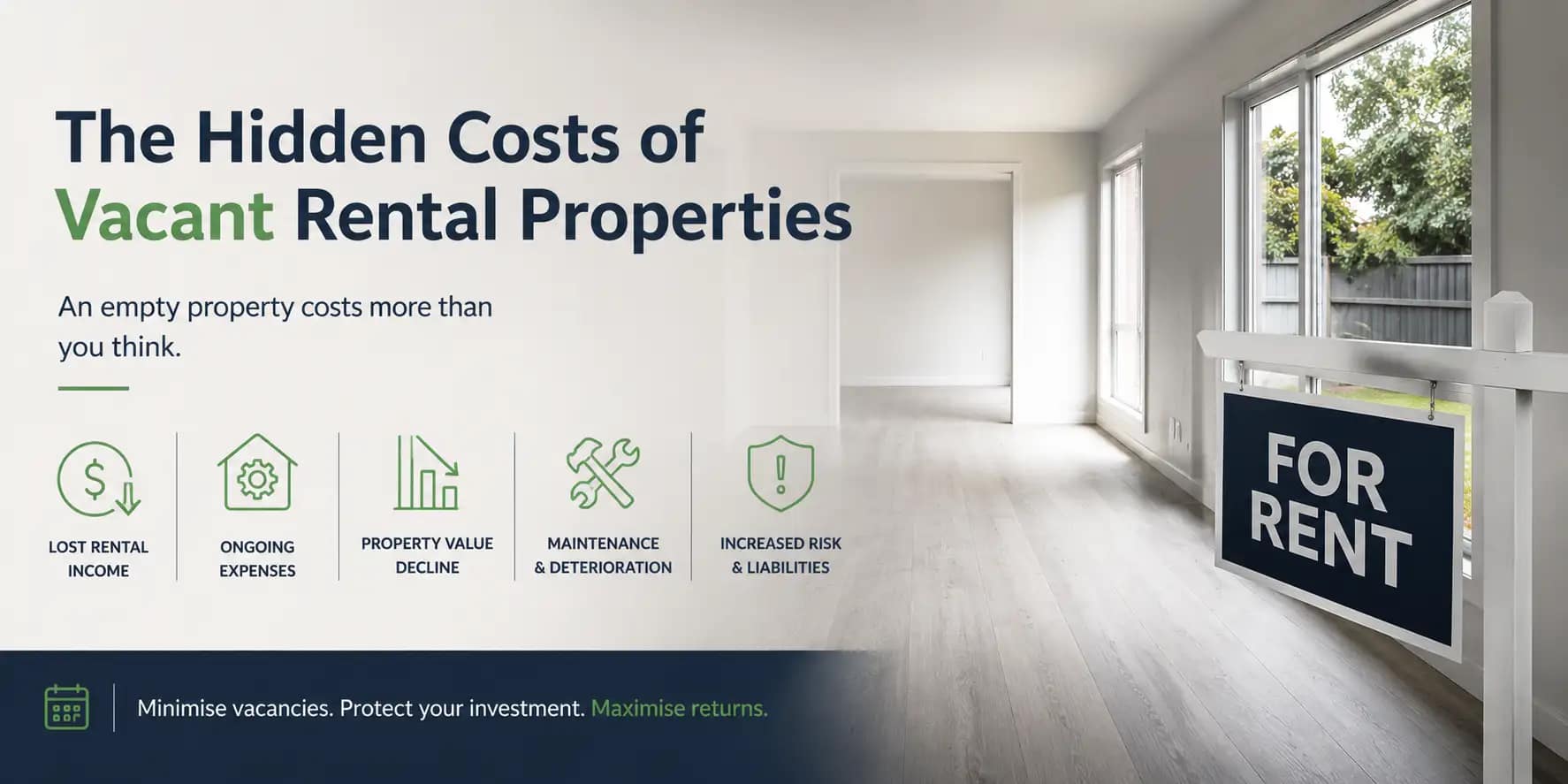
Vacancy is one of the biggest threats to rental income.
Every week a property sits empty represents lost revenue that can never be recovered.
For example:
A property renting for $550 per week that remains vacant for four weeks loses:
$550 x 4 = $2,200
That’s income gone forever.
First impressions matter.
Ensure the property is:
Quality listings generate more enquiries.
Include:
Overpricing often results in extended vacancy periods.
Market-based pricing usually produces better long-term returns.
Not all renovations are equal.
The goal is to focus on improvements that tenants genuinely value.
Heat Pumps
Southland winters can be cold.
Heat pumps are one of the most attractive features for tenants and often improve tenant satisfaction significantly.
Fresh Paint
A freshly painted property feels cleaner, newer, and more appealing.
Modern Flooring
Replacing worn flooring can instantly improve presentation.
Kitchen Improvements
You don’t always need a complete renovation.
Simple upgrades such as:
can make a significant difference.
Bathroom Improvements
Bathrooms strongly influence tenant decisions.
Simple upgrades often provide excellent returns.
Healthy Homes compliance is no longer optional.
Tenants increasingly expect properties to be:
Properties that meet Healthy Homes Standards often attract stronger tenant demand and experience lower turnover.
Key compliance areas include:
Appropriate fixed heating in living areas.
Ceiling and underfloor insulation where required.
Extractor fans and adequate airflow.
Effective drainage and moisture barriers.
Sealing unnecessary gaps and draughts.
Compliance not only reduces legal risk but also improves the overall appeal of your rental property.
One of the biggest mistakes landlords make is waiting for problems to become serious.
Preventative maintenance is almost always cheaper than emergency repairs.
A small leak repaired today may cost a few hundred dollars.
Left untreated, the same leak could result in thousands of dollars of damage.
Preventative maintenance protects both rental income and property value.
Routine inspections help identify issues before they become major problems.
Regular inspections allow landlords to:
Inspections also provide opportunities to discuss concerns with tenants and maintain positive relationships.
Many landlords either:
This can drive quality tenants away.
This can result in income falling behind market levels.
The best approach is regular market reviews.
Consider:
Incremental adjustments are often better received than large increases.
Energy efficiency has become increasingly important for tenants.
Properties that are cheaper to heat and operate are often more desirable.
Consider:
Energy-efficient homes often attract longer-term tenants and stronger demand.
Successful property investors know their numbers.
Track:
Accurate records help you:
Good financial management is essential for long-term success.
Many landlords underestimate the impact professional management can have on investment performance.
An experienced property manager helps with:
Finding reliable tenants is critical.
Ensuring consistent cash flow.
Access to trusted local contractors.
Helping landlords meet legal obligations.
Protecting property condition.
Professional marketing and tenant placement.
For many landlords, professional management pays for itself through reduced vacancies, better tenant retention, and fewer costly mistakes.
Avoid these common pitfalls:
Small mistakes can have significant long-term financial consequences.
The highest-performing rental properties aren’t necessarily the newest or most expensive.
They are usually:
Successful landlords focus on consistent long-term performance rather than chasing short-term gains.
By protecting your asset, reducing vacancies, and maintaining strong tenant relationships, you position yourself for sustainable growth and stronger returns year after year.
Maximising the return on your rental property is about much more than increasing rent.
The most successful Southland landlords understand that profitability comes from a combination of tenant retention, preventative maintenance, compliance, strategic improvements, and professional management.
By focusing on these key areas, you can increase rental income, reduce unnecessary costs, protect your investment, and build long-term wealth through property ownership.
At Aggerholm’s Property Management, we help landlords across Invercargill and Southland achieve better results from their rental properties through professional management, expert advice, and local market knowledge.
Contact our team today to learn how we can help you maximise the return on your investment property.
Phone: 0800 276 583
Email: anita@arental4u.co.nz